

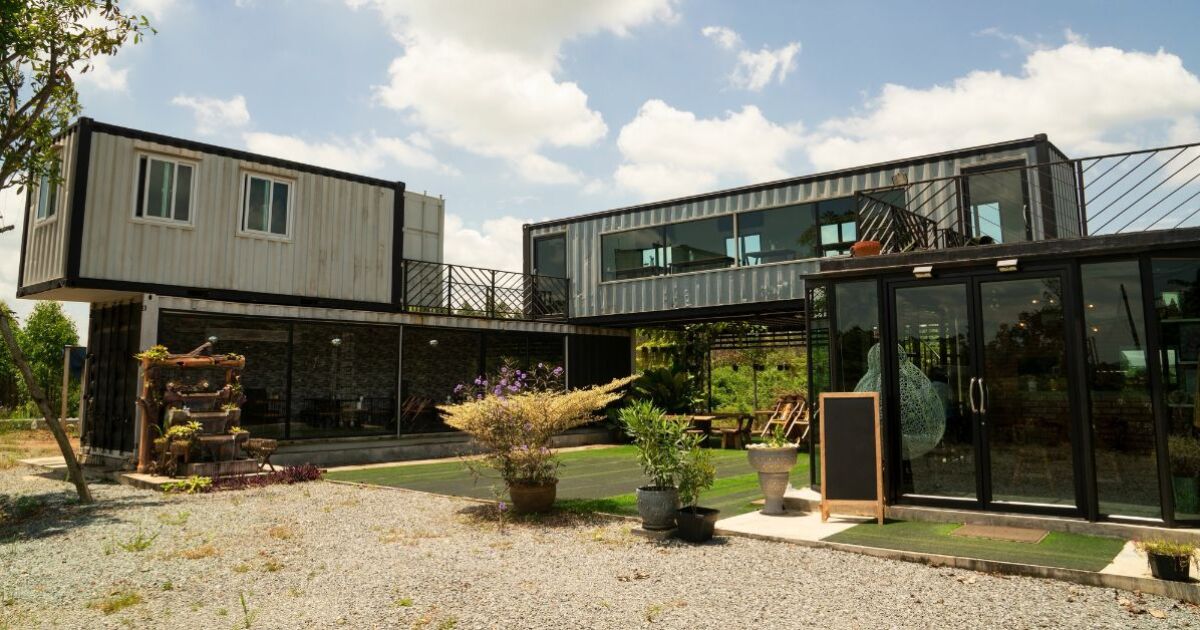
The developing housing market has put forward modular and container houses as innovative solutions for various challenges. With their unique functions, these housing types offer promising opportunities and come with remarkable risks. For lenders it is important to understand both the good and the bad of modular and container houses in the housing market, important for future preparation for the financing of these unconventional property.
The benefits of financing modular and container houses
Affordability and efficiency are two of the most attractive aspects of modular and container houses. These houses meet a growing demand for cost -effective home solutions per design, in particular in urban areas where affordability often has priority.
Read more:
Modular houses also stand out for their building speed. In contrast to traditional building methods, where timelines are often unpredictable due to weather or labor shortages, manufacturers structure modular houses in advance in controlled environments and assemble them on site.
The streamlined construction process
Moreover, the attraction of modular and container houses extends beyond affordability. Eco-friendly modular houses contain sustainable design principles, such as energy-efficient materials and renewable power options. These elements meet the growing demand for consumers for greener life, which may increase the resale and investment value of these properties.
The challenges of financing unconventional homes
Although modular and container houses offer exciting opportunities, they also introduce challenges for lenders. An important care is the appreciation of these properties. Given their unconventional nature, the accurate assessment of them can be difficult, because traditional statistics do not always apply. This uncertainty can make risk assessments more difficult and the ability of the lender to match the financing conditions with the needs of the borrower.
Read more:
Another obstacle includes zoning plans and approvals of the regulations. Modular and container homes are often confronted with stricter control of local authorities, with some areas of law that impose limits or additional requirements for their use. Long -term sustainability is another factor to consider. While some manufacturers reuse container houses of sturdy shipping materials, they are not immune to corrosion problems, especially in hard climates.
Find common ground
Despite these challenges, modular and container houses remain a viable investment in a rapidly changing housing market. Their potential is clear in investigating research and data about
For lenders, the fact that the good and bad of modular and container houses are facing market trends and creates strategic partnerships with expert developers. Quality developers who specialize in high -quality construction and maintain open communication can continue to inform lenders about potential risks, making the best path to success possible. With a balanced understanding of their benefits and risks, lenders can position themselves to take advantage of these innovative housing trends, while the unique challenges they take on.