

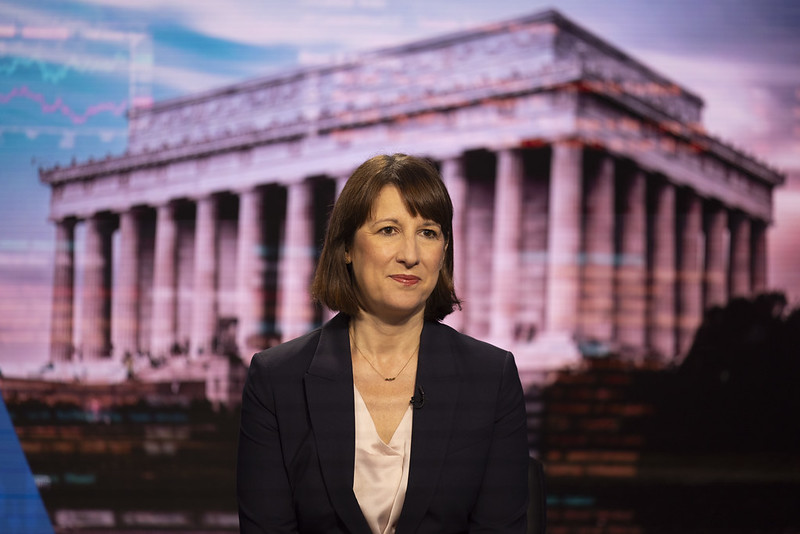
Chancellor Rachel Reeves has met with the Big Six lenders to agree support for mortgage borrowers amid rising interest rates due to the war in Iran.
Image: Crown Copyright
Reeves, alongside UK Finance, brought together the six largest banks and building societies to “take stock of the impact of the conflict in Iran on households and small businesses”.
Lenders have committed to proactively contacting 1.6 million customers whose fixed rate contracts end between now and the end of the year.
This sets out customers’ options or how they can access tailored support well in advance of payment changes.
It comes as analysis from Moneyfacts has found that borrowers moving from a five-year fixed rate would face a payment shock of £4,655 a year to now secure an equivalent deal, based on a £250,000 mortgage.
Those who return to their lender’s standard variable interest rate face an even bigger increase in costs.
The Chancellor also reaffirmed the Mortgage Charter with lenders, leaving the safety net open for anyone worried about their mortgage.
The Charter allows customers to book a new rate up to six months in advance and switch to a new deal with their existing lender without a new affordability check.
It also provides temporary breathing space, including a move to interest-only payments for six months, with support calls not impacting credit scores.
Lenders are reporting an increase in the number of customers seeking guidance, but the Treasury Department says real-time data shows “lending is holding up well and delinquencies remain low.”
It says that since 86% of mortgages have a fixed rate, most borrowers are not directly affected by short-term market movements.
Reeves says: “In uncertain times, people need clear reassurance and practical help.
“That’s why I’ve brought together the biggest lenders to increase support and ensure anyone with concerns can quickly access Mortgage Charter options without their credit score being affected.”
Damien Burke, head of regulatory affairs at consultancy Broadstone, said: “This is a positive step that should help borrowers better understand their options well before their fixed rate deals expire, which could make a significant difference in helping households plan and manage higher repayments.
“At a time of macroeconomic uncertainty, proactive communication and early engagement are often the most effective ways to provide reassurance and prevent short-term payment pressures from turning into longer-term financial difficulties.
“From the lenders’ perspective, the key challenge will be operationally reaching a large number of customers and providing meaningful, tailored support.
“I think this is another clear use case for using ongoing, tailored, individual affordability assessments and flexible payment options to efficiently deliver tailored, targeted support.”