

Process content
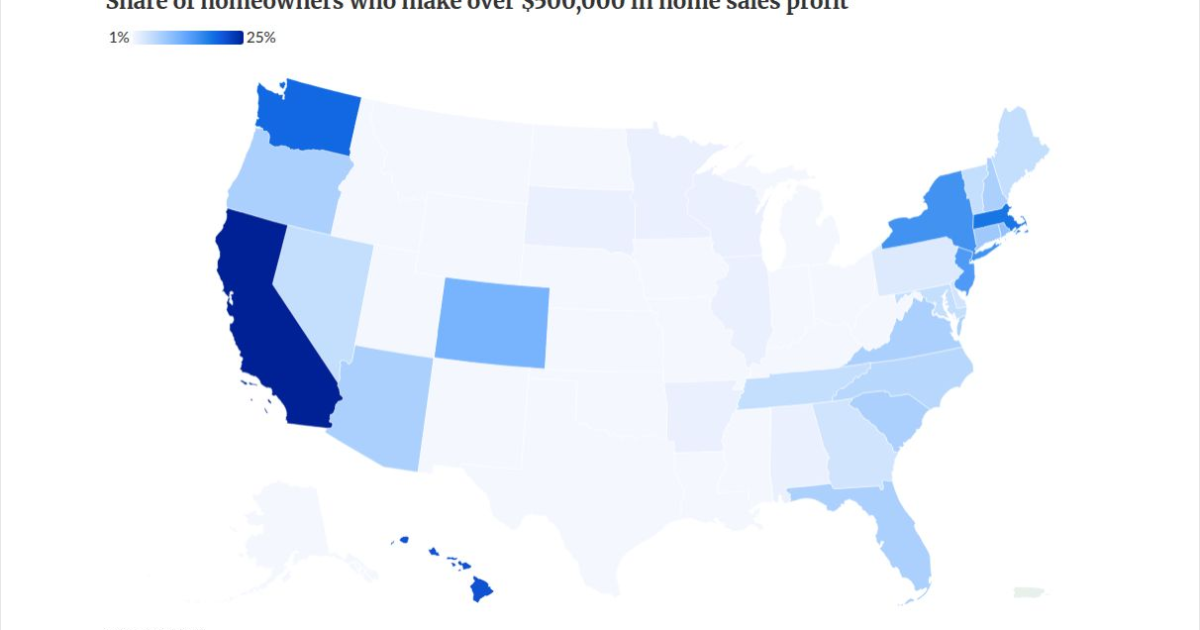
At least 10% of homeowners in seven states are paying
“Homeownership remains a cornerstone of wealth building, but stagnant capital gains thresholds are increasingly affecting how – and when – homeowners can access those gains,” said Archana Pradhan, chief economist at Cotality.
Home values have risen 147% over the past 15 years, pushing more homeowners above the capital gains tax exemption threshold of $250,000 for singles and $500,000 for married couples. A quarter of California homeowners pay capital gains taxes, followed by Hawaii at 21% and Washington at 19%, the report found.
California has some of the lowest affordability in the country, and Hawaii has a median home price of $735,000, compared to the national average of $417,450. Nearly 20% of homeowners in Washington pay capital gains taxes, yet the typical home sells for nearly $100,000 less than in California and Hawaii, indicating that home prices have made significant progress in a short time, the report said.
Pressure remains in states where capital gains on home sales are still rare. In South Dakota, the number of homeowners paying capital gains taxes has doubled in two years, while West Vriginia rose four spots in the rankings as the trend spreads beyond the coast, the report found.
The result is a growing number of homeowners who are wealthy on paper, but limited in practice.
What is being done?
The home sales tax exclusion has not been updated since 1997, sparking debate among experts and industry advocates. As a result, the More Homes on the Market Act was introduced in the House of Representatives last February. Under the bill, tax exemption thresholds for single filers and married couples will double to $500,000 and $1 million, respectively. The bill also requires that these amounts be adjusted annually for inflation.
Evan Liddiard, director of federal tax policy for the National Association of Realtors, said at the Realtors Legislative Meetings in June that doubling the home equity exclusion is reason enough to support the bill.
“This is about people wanting to move,” he said. “We have families who need to add to their homes but can’t access it because this tax is tying up inventory.”
The bill has bipartisan support, but skepticism remains, NAR said.